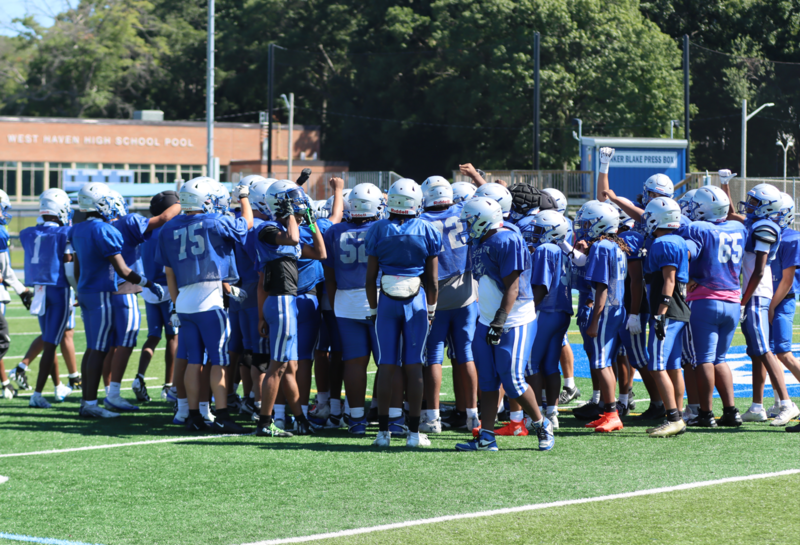

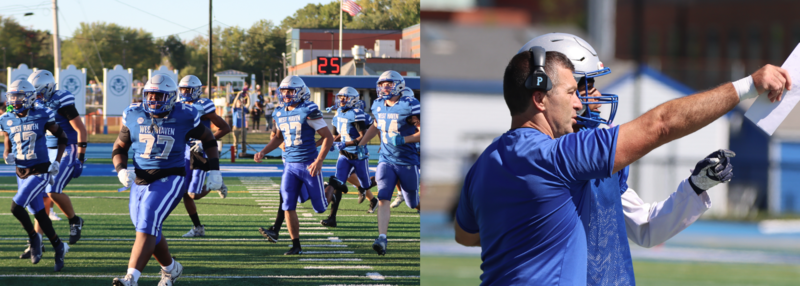
 When West Haven High School opened its football season against Cheshire on September 11, the game provided an early test for the team and an opportunity to learn from the demands of competition. The game was stopped nine times during the second half because of cramping, with several additional players experiencing cramps on the sidelines. The experience led West Haven Athletics to take a closer look at how athletes can better prepare for the demands of competition.
For Co-Athletic Director Mike Anquillare, the number of cramping incidents stood out. “The game was stopped nine times due to cramping,” Anquillare said. “There were also several instances of cramping on the sidelines, with several players having to come out of the game.”
Following the game, Anquillare spoke with West Haven Public Schools Superintendent Neil Cavallaro about the situation. Cavallaro recommended several apps that could help athletes track their hydration and suggested reaching out to University of New Haven Athletic Director Devin Crosby. Crosby and his staff responded quickly with information that could be shared with West Haven student-athletes, giving the district an opportunity to learn from a college athletics program. West Haven Athletics would like to thank Crosby and the University of New Haven staff for their quick response and for taking the time to provide valuable information and guidance.
The information from UNH emphasized that preparation begins well before an athlete arrives for a game. Its sports medicine staff recommended beginning hydration with fluids containing sodium a day or more before competition and continuing that preparation on game day. The staff also noted that products such as SaltStik or, for some athletes, pickle juice can be useful options. At the same time, the guidance reinforced that there is not always one explanation for why an athlete experiences a cramp. Even athletes who make appropriate choices can still experience them.
 The experience also gave Head Football Coach Tom Unger an opportunity to reinforce those lessons with his players. “We wanted our players to understand how important hydration and good eating habits can affect your performance,” Unger said. Since the Cheshire game, the football program has spent more time discussing what players eat and drink throughout the day. The team also added a Thursday meal following practice featuring grilled chicken and pasta and has provided additional electrolyte drinks as game time approaches. The school has also helped provide a healthy meal before Friday games.
For the football program, those changes have become part of a larger effort to help players understand that preparation does not begin when they arrive at the field. The choices athletes make during the days leading up to a game can play a role in how prepared they are when competition begins. The Cheshire game provided a natural opportunity to reinforce that message with the team.
WHHS Athletic Trainer Allison Standish also emphasized that cramping can have several contributing factors. While dehydration is often considered the primary cause, Standish explained that neuromuscular fatigue is being identified as a leading factor. When a muscle becomes overly fatigued, the nervous system can cause it to become hyperactive and prevent it from properly relaxing. How an athlete trains, changes in workload, recovery and the conditions in which they compete can all play a role.
That can be especially important early in an athletic season, when athletes are adjusting to the demands of regular practices and games. Standish explained that athletes can be more susceptible when their conditioning does not yet match the workload they are facing. Sudden increases in intensity can also place additional stress on the body.
Following the Cheshire game, Standish wanted students to have a better understanding of how their everyday choices can affect their preparation. “Many of our students do not know what they are often putting into their bodies and the positive or most often negative effects it can have on their performance,” she said. Standish regularly provides athletes with information about meals before and after competition and encourages students to ask questions so they can make more informed choices.
Standish also recommends that athletes begin hydrating well before competition rather than waiting until they are on the field. She advises drinking approximately 16 to 24 ounces of water two to three hours before a practice or game, followed by another eight ounces about 20 to 30 minutes beforehand. She also encourages athletes to gradually increase their training workload, use dynamic warmups and take time to stretch following practices and games. During more intense workouts or hot weather, electrolyte replacements can help replace sodium lost through sweat.
That focus on preparation has also involved Food Services. Food Services Director Meg Kingston and her department have worked with the athletic program to provide nutritious options for student-athletes. Kingston emphasized that what students eat can support their energy and recovery while also contributing to their overall development.
For the football program, that has included providing meals before competition. A recent pregame meal included turkey and cheese wraps, fruit, pretzels and milk. The goal is to give players an option that can help them fuel their bodies before taking the field.
The response to the Cheshire game has brought several areas of the school community together around the same goal: helping students understand how to prepare themselves for competition. Coaches can reinforce those lessons with their teams, athletic trainers can provide guidance to individual athletes, and Food Services can help provide appropriate meal options. The connection with the University of New Haven also gave West Haven Athletics an opportunity to learn from outside expertise and bring that information back to its students.
What began as an early-season experience on the football field has therefore become an opportunity for West Haven Athletics to continue educating its student-athletes. By giving students more information and resources, the district can help them make thoughtful decisions before they compete and develop habits that can serve them throughout their time as student-athletes.